Erling Hope
DESIGN • MAKE • COLLABORATE
the Still, Small Voice experiment
If you’ve ever had the experience of being unable to communicate with a colleague, a co-worker, a family member, because they seem to live in an alternate reality, then you have probably visited the front lines of the Cold Civil War, what we once called the Culture Wars. Stolen elections, Biden’s laptop, chemtrails, to say nothing about shape-shifting infanticidal alien reptoids running the Deep State: These caustic, lurid tales, mobilized and accelerated to enact a radical corporate deregulatory agenda, and to degrade the democratic nation-state, are succeeding wildly at shredding the social fabric of a once proud, always flawed, currently democratic republic.
There’s a whole vocabulary being built around our anxiety about the sense that Americans no longer, effectively, live in the same reality. Post-truth politics, the epistemic crisis, the semantic apocalypse, the “Death of Cronkite” and alternative facts. We don’t live inside the same stories about the world around us, about our fellow humans, about what is real and what is illusion and deception.
The Still, Small Voice experiment has been a year-long exploration of building community and orchestrating enchantment without the use of stories or claims about the nature of reality or the human role in it. Instead, it asks if we can satisfy these abiding human needs using only the simple act of questioning. Meetings are anchored in silence, and participants are welcome to speak as we feel moved. Here, you will find a set of values that we’ve found work well, so far, and that we try to embody in our actions and attitudes. Below, you will find a schedule of previous and upcoming queries, and further supporting resources at the bottom of the page. If you are interested in exploring a variation on this experiment, I encourage you to reach out to me. I will be happy to share what I’ve learned, and to hear your own ideas about building enchanted, beloved community.
EXTRA: What is this?
On Jan.2, 2026, Ezra Klein published an interesting conversation with Stephen Batchelor. Whatever your thoughts are about Ezra, this exchange struck some chords that resonate with the Still, Small Voice experiment. And a couple of discordant but illuminating notes were sounded as well. I would encourage you to listen to it if you have the bandwidth and interest. What follows below is a fairly specific nerd-out on some of the subjects covered. The question at the heart of Klein’s conversation, at the heart of the Chan and Seon Buddhist meditation they are discussing—the question “What is this?”—is a really interesting and singular variation that we should explore, but without some context it may present as especially vague. The query is particularly interesting because it is a Janus-faced question; it points in two directions at once, directions that can’t really be reconciled. And this is the condition in which we really get to dig in to what it is to be human, and into the tensions at the heart of the Culture Wars.
In the Chan/Zen/Seon context, the “What is this?" query inclines us to be receptive to the strangeness of human life, to notice the unfamiliar, to notice what might often go unnoticed, and at the same time to treat the familiar as novel and strange. What is tricky here is that this might feel like an invitation to label and name the states we observe. “What is this?” seems to ask for a response. But in the Buddhist context it’s more about a sort of cognitive posture being described by the query, rather than a direct question asking for an answer.
In the stream of stimulus parading before our attention, some of it from the world around us, some of it from our inner processes, we are to notice not just the states, fuzzy-edged as they might be, but also the interstices, the transitional gradations between states. What is this really? It is intended to disrupt the logical operations of the rational mind, to trouble the categories and concepts that keep us a step removed from immediacy, from awareness.
And then on the other hand, outside of the Buddhist context, “What is this?” solicits the very naming, taxonomizing function that would seem to be disrupted by this first function. Crucially, in Chan / Seon / Zen , labeling is regarded as a kind of attachment, as an effort to control the phenomena, which is in turn regarded as a kind of error, or illusion.
This may seem like an especially niche topic to dig into. And sure, it’s specific, but it’s specific in a way that reaches out and touches all of human life in some way or another. Language, the naming and categorizing of phenomena, can be a kind of trap, and then again it can be immensely useful. How are we to know when language is operating the one way, and when the other?
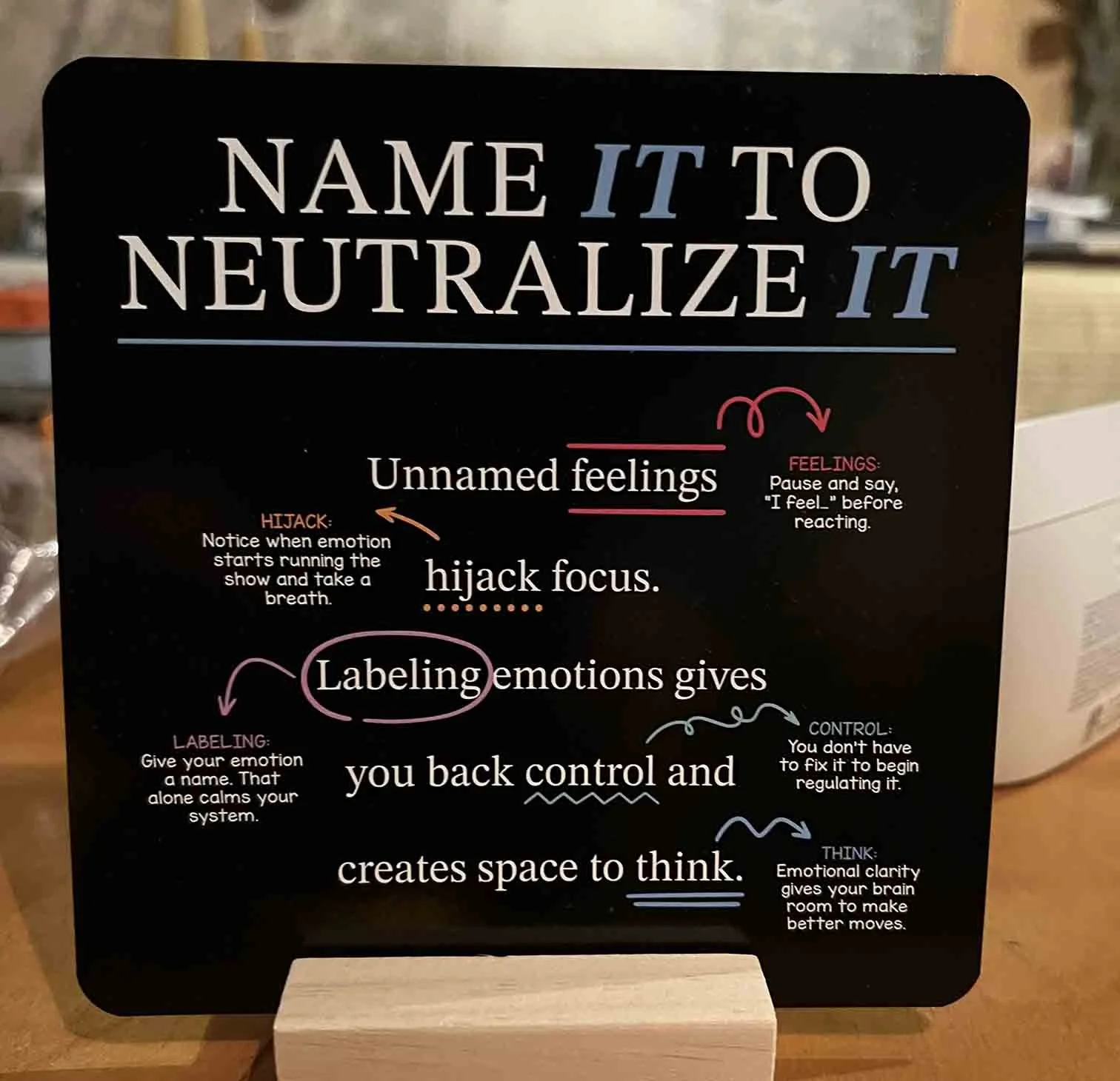
So I got my kids
a set of cards for Christmas, a 52-card set of sort of cognitive hacks for navigating life. The first card we picked to reflect upon, for our first week of this experiment, reads “NAME IT TO NEUTRALIZE IT: Unnamed feelings hijack focus. Labelling emotions gives you back control and creates space to think.” Even when feelings are confusing combinations of emotions, maybe especially then, naming them can be useful for managing our emotions, rather than having our emotions manage us.
There is abundant research into the efficacy of “Name it to tame it” or affect labeling practices for stress reduction, emotional regulation and decision making. So that should be what we do, right? Maybe. Currently, in English language psychology fields, it is generally recognized that there are between six and eight “universal” emotional states. Robert Plutchik's Wheel of Emotions, for example, lists joy, trust, fear, surprise, sadness, disgust, anger and anticipation as a starting point.
But cultural variations abound. My wife was raised in Japan, and the range of emotional / cognitive states described in Japanese that have no real correlation in English is bewildering. Words like yugen (幽玄), natsukashii (懐かしい), mono no aware (物の哀れ), amae (甘え) are notoriously difficult to convey. Insta
Similar conditions probably populate every language. Russian has toska (a deep emotional state of melancholy or spiritual anguish), Brazilian Portuguese has saudade (sometimes described as feelings of nostalgia and yearning for a thing that never was), German has waldeinsamkeit (the feeling of being alone in the woods, which evokes a blend of peacefulness and a sense of belonging in nature), Finnish has sisu (a blend of determination, resilience, and courage in the face of adversity), Chinese has xiāngyù (feeling a deep, sometimes unexplainable, emotional connection to someone or something, similar to profound empathy), Tahitian has māuruuru (a sense of gratitude and appreciation, often connected with a deeper emotional recognition of one's community and relationships), Greek has meraki (the feeling of doing something with soul, creativity, and love; it reflects passion and a sense of deep emotional investment in one’s work).
Suddenly, “Name it to tame it” seems not so simple. The term “affect labeling” makes it sound scientific and reliable, just as the act of affect labeling lends a sense of stability to the project of understanding and regulating ourselves. But there is a vagueness, a randomness, a cultural specificity that shapes and shades emotional states. Add to this the work of Julian Jaynes or Rob Boddice and we get a sense that whatever we call our emotional states is really very arbitrary.
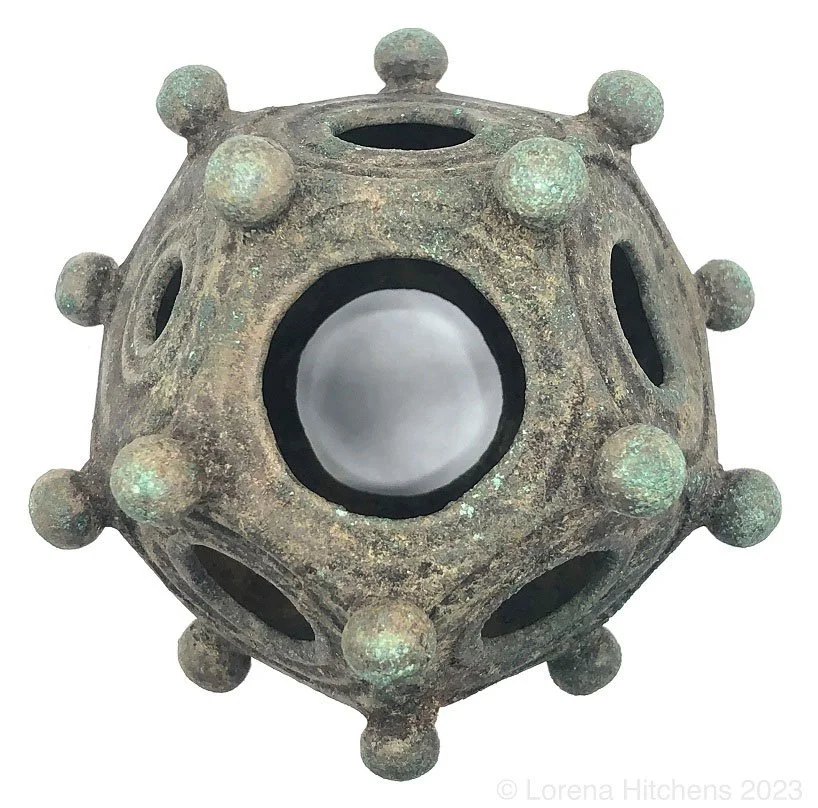
What is this?
No-one knows! Found throughout the ancient Roman world, this Gallo-Roman dodecahedron is a small, hollow object made of copper alloy. Speculative theories abound, but we really have no idea what this is.
So, What is this? What is this moment? What is this political moment? What is this historical moment? What is this? Are we just observers in a failing system, a collapsing empire? Is this just the current stage of an endless parade of chaos that marks human life? Such that, nothing is particularly urgent, and our main task is to not get caught up in the financialized noise-scape, the distraction engine, the attention market?
Or is this a historical hinge moment? Is this a moment when a nation with the potential to embody hope and promise, as the meltingpot, as the global laboratory for pluralism, the proving ground for the proposition that humans have a future—is this the moment when we must confront our own species of fascism? Is this a moment when our actions matter?
It is, most surely, both of these things at once. And also, something else as yet unnamed. That first part, as it were, takes care of itself, as we must take care of our own selves, breathe deeply, savor, observe. That last part will unfold around us, and we are privileged to be able to observe what we can, perchance to name it.
But that middle part, the part that summons us to participate in this drama, to act as conscience directs, even if the task is hard and requires sacrifice, even if uncertainty shades the present and masks the future, that, among other things, is what this is.
The Power of Names New Yorker
A Brief History of True Names and Magic Reddit
"And when you know all the names of that bird in every language, you know nothing, know absolutely nothing, about the bird… So I had learned already that names don’t constitute knowledge." - Richard Feynman
“What he forgot to tell me is that knowing the names of things is useful if you want to talk to somebody else”: Richard Feynman On The Difference Between Knowing the Name of Something and Knowing Something
https://www.reddit.com/r/whatisthisthing/
https://www.instagram.com/p/DS5Wk2xjnEh/?utm_source=ig_web_copy_link&igsh=NTc4MTIwNjQ2YQ==
DEC 28, 2025: Why are you here?
This is the darkest of times. It is a time of inwardness, of introspection. It is the season of the story of the Godhead becoming born into the body of a human infant. It’s a time in which we are made aware of the dynamic frailty of being soft bodies in a cold world, in a fractured culture, in a failing system.
And it is a time for gathering together, in friendship, in kinship, in defiant optimism for the dying of the old ways, and the rebirth of the new.
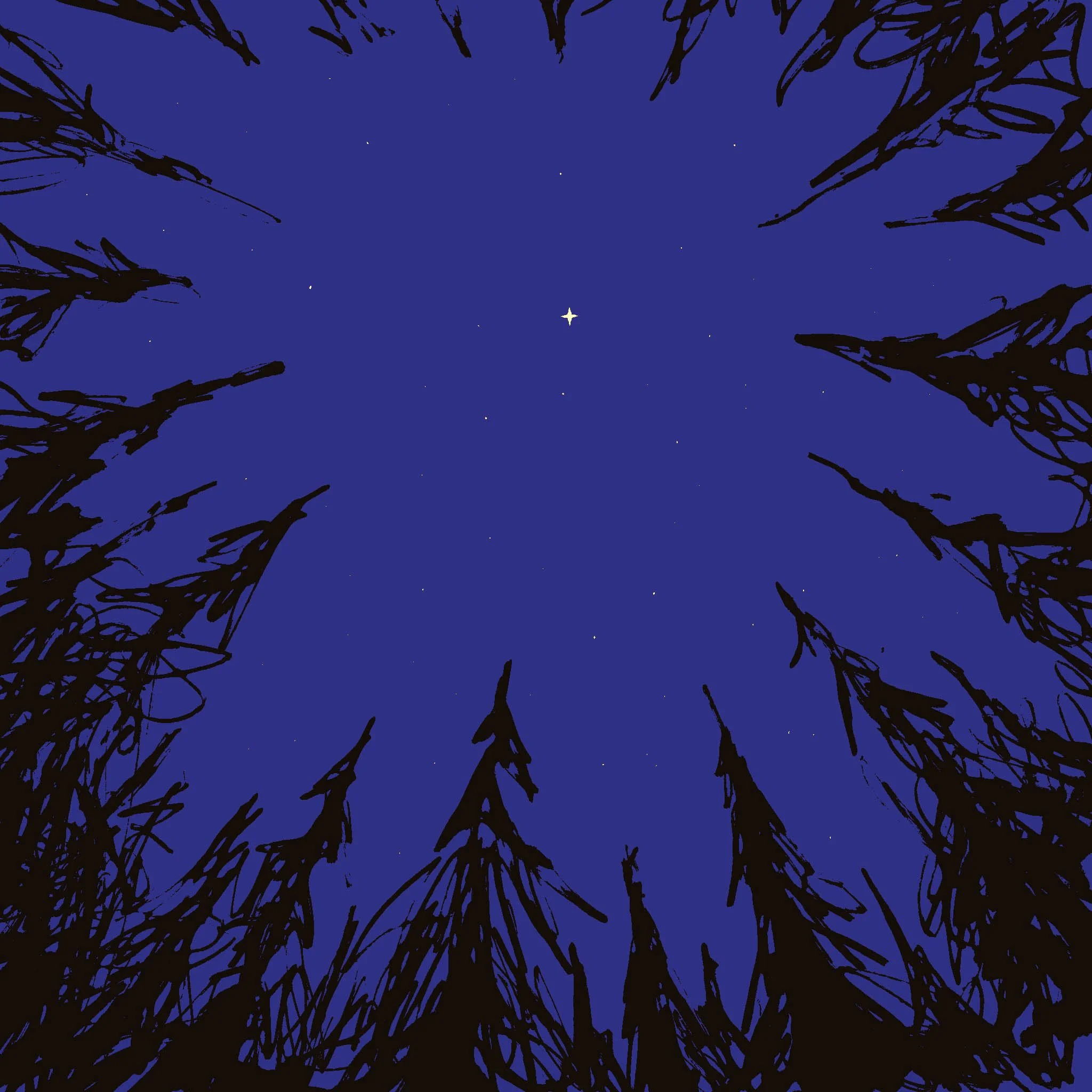
Why are you here?
A question that poses as a cliché, or a trifle. You are here because you saw a notice, because a friend invited you, because you were curious, because it was Sunday morning and you didn’t know what else to do. It is the smallest of questions and it is the biggest of questions. It is the question that greets you at the receptionist’s desk. And it is, essentially, Job’s question to YHWH.
Here can mean this room, this gathering, this particular hour of shared silence. It can also mean this community, provisional and imperfect, still forming itself in real time. And it can mean something much larger: this life, this body, this brief and improbable appearance in the long story of the world.
Quaker practice has a way of letting questions widen rather than close. In the silence, “Why are you here?” does not demand a single answer. It may surface as a practical inquiry about intention or responsibility. It may arrive as a relational question—about belonging, usefulness, or obligation to others. Or it may open into the oldest and most destabilizing version of the question: what is the purpose of a human life, and how would one know?
You are not asked to resolve these meanings, or even to keep them separate. You may find them bleeding into one another. The reasons you showed up today may not be unrelated to the reasons you show up for people, or to the deeper sense—clear or elusive—that your life is being asked for something.
As with all our queries, this one is an invitation, not an exam. Let it work on you as it will. Sit with whatever stirs, whatever resists, whatever remains opaque. In the quiet, notice which version of the question seems to be asking you.
Why are you here?
November 23rd What hardships are you grateful for?
“We must imagine Sisyphus happy.” This is the last line of Albert Camus’ “Myth of Sisyphus”. (“Il faut imaginer Sisyphe heureux.”) He writes this in 1940, during the full bloom of the last flowering of fascism. He imagines happiness as an act of defiance in the face of absurd and pointless hardship. Sisyphus, condemned to roll a boulder up a mountain every day for eternity, only for that rock to roll down to the valley below every evening.
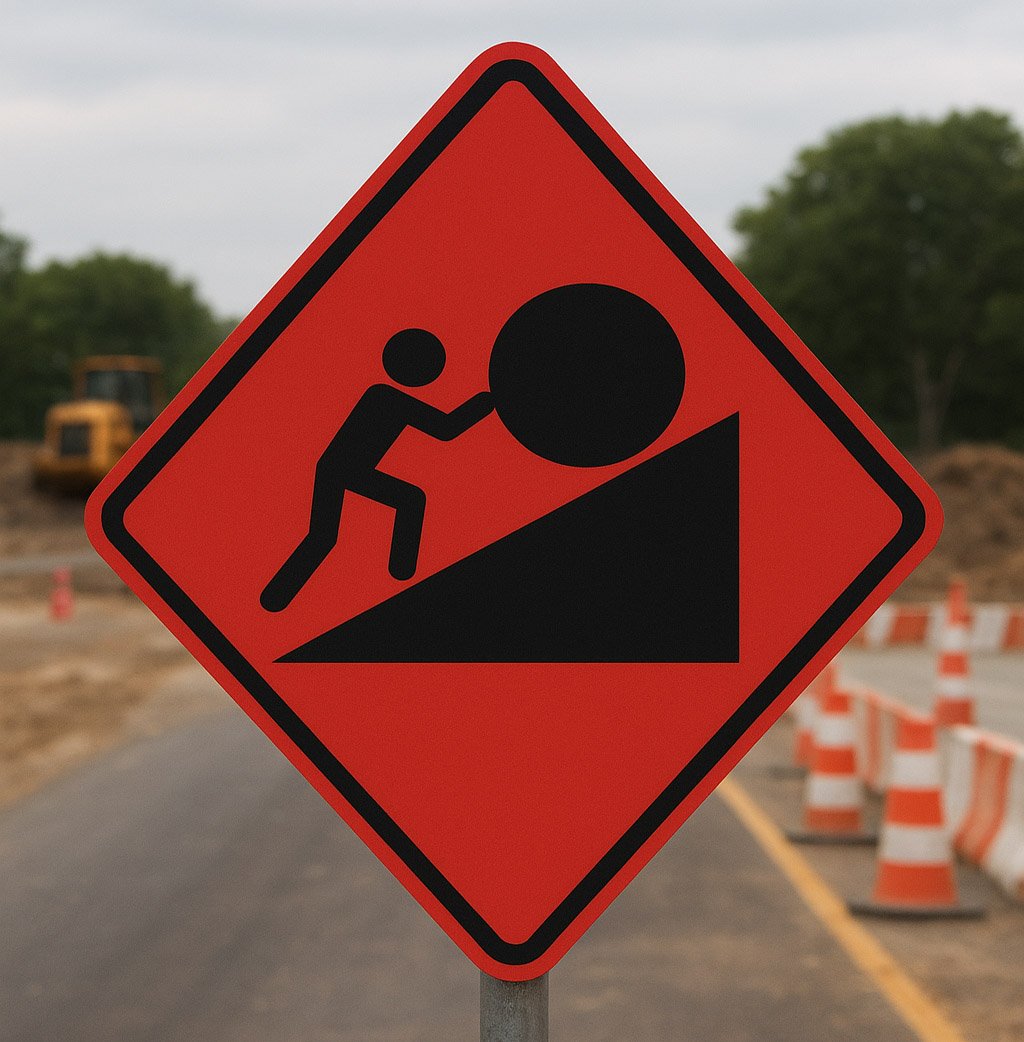
Adversity visits every life.
We humans have the capacity to frame our hardships, to tint their hue and associate our troubles with values and experiences and ideas that affirm life, that enable us to love one another, to make hard decisions.
What hardships have helped you to affirm life in the midst of struggle?
What hardships are you grateful for?
Oct 26, 2025: How spooky are stories?
Beavers build dams. Bees build hives. Humans build stories.
Stories may not keep out wind and weather. But they allow humans to explore emotions, to rehearse scenarios, to align values, to share experiences. They allow humans to cooperate on the scale of nature. And a good story; it can rearrange us on the inside. It can change us on a molecular level. What is the placebo effect but a story? A story that effects the way the glucose and proteins and hormones and neurotransmitters interact.
Stories are deeply weird. They can comfort us and they can inspire us. They can terrify us. And they can galvanize us into mass collective action.
We are living through a moment when bizarre stories of sinister conspiracies have been cynically harnessed to enact the most consequential political and civic changes, maybe in the history of this country. Stories are just strings of words. Yet they tremble the earth.
What stories rearrange you? What stories have shaped who you are? What stories scare you?
How spooky are stories?
June 22, 2025: What does it mean to be fully alive?
“Not ignoring what is good,” says Melville’s Ishmael, “I am quick to perceive a horror, and could still be social with it—would they let me—since it is but well to be on friendly terms with all the inmates of the place one lodges in.” What does it mean to be fully alive in a world replete with horrors, in the throes of the Sixth Great Extinction, in the terminal phase of the democratic nation state? There are joys, there are triumphs—personal and occasionally, selectively, communal.
Still, Small Voice gatherings are for everyone. Which means, they’re not for everyone. Participants span the deeply divided American landscape. If you’ve given up on the American Experiment, if you despair of the Human Project of which it is a signal component, if you are convinced that you have nothing to learn from those you oppose, then there are probably better ways to spend your time.
But if you hold a certain defiant optimism, if you steward enough curiosity to keep yourself engaged, if you are committed to orchestrating wonder in your encounter with this broken world, then your fellow travelers in Still, Small Voice gatherings want to hear from you, and want to share what they understand about what it means to be fully alive.
May 25, 2025: Who do you think you are?
I have a confession to make. I think I am a Utopian. I know it’s pretty unpopular these days. Nothing haunts the contemporary imagination like the pervasive visions of dystopia, both fictional and documentary, streaming from our feeds and platforms and cinemas. I suspect that it’s because we sense that we’re some amount closer to that reality than to anything resembling “the world that ought to be”.
The utopia I am fixated on is fairly humble. It is one in which our imaginations are drawn to, or can at least access, visions of Arcadia as readily as they currently converge on versions of Armageddon. What would that world look like? One where we can imagine something close to perfect as easily as we now conjure utter devastation, despair, depravity?
The Still Small Voice experiment began as an exercise of this faculty, as an imagining of what it would look like to build a world as much closer to goodness as we currently are to catastrophe, to create a space where people can explore the depth and complexity of human life in respectful, reverential community.
DEC 22, 2024: What is the Human Being?
As we conclude this year-long experiment in gathering and reflection, we arrive at the question that informs all the other questions: What is the Human Being?

So, what are we?
Are we the viral pandemic, progressively sickening our host, this small vulnerable planet? Are we the cosmos staring back at itself? The Word made flesh? Such a vast range of possibilities lies in the space between and beyond these queries that it becomes impossible to say with any finality what we are.
[DRAFT] So we turn to the imaginers, the writers and artists and poets and songmakers to illuminate this space. We are “the linguistic layer of the biosphere” writes Kim Stanley Robinson. We are the recorders of the history of the land says Wendell Berry. “We are a fleet a drones constantly being hacked and counterhacked by angelic and demonic forces” writes one anonymous participant in the CrazyMaking project, progenitor to Still Small Voice.
What are we? is not a new question. It is one that, whether you notice it of not, we ask a lot. For millennia, humans have been looking at the larger animal world and saying things like “we use language, and other animals don’t, so that’s what makes us different.” And then we find vervet monkeys doing what can only be described as language, and then prairie dogs and even yardbirds. So we move the goal post: “We use tools, etc.” and then corvids and chimps and octopi are observed doing that. And so then it becomes “Well we make tools” and then various animals are spotted going at it and then “We have culture…” and “We have abstract thinking” and we make art and exhibit wonder and have self awareness and theory of mind and ponder mortality and every time, we observe animals performing that behavior. Even plants and fungi are getting in on the action now, hosting marketplaces and making something like ‘plans.’
More recently, we have been looking in the other direction, at artificial intelligence, and saying “Well, AI can’t do creative thinking and innovation” or emotional intelligenceI or long narrative arcs. I told my students in the robotics class to draw hands, draw hands, because AI couldn’t do that. But it’s starting to get savvy at that now too.
We’ve been doing this defensive, rear-guard action, hemming ourselves in, from both directions now, becoming smaller and smaller and smaller. It’s like all we’re really good for anymore is following a conversation in a loud, crowded room (not as easy as it seems. We’re actually pretty amazing at it, so suck it, AI.)

But maybe we’ve looking at this wrong.
Maybe what’s being exposed is instead our kinship with all this phenomena; plant, animal, digital. Maybe, if we are special, it’s because we are an intricate part of all this, rather than some stand-alone singleton. Maybe our “main character energy” is clouding our thinking, and has been all along.
But asking questions about the nature of beliefs and belief systems, including religions and conspiracy theories, and engaging these acts and these phenomena as creative works of expression, as art, is fundamentally asking about the nature of the human being. Because nowhere in this work will you find the idea that beliefs are “merely works of art.” There is nothing mere about the creative process. There is something in it that reaches into the basement of existence, jacks straight into the electrical panel over there by the dusky utility closet. There is something about the creative process that embeds us into collaboration with subatomic particles, conjuring ever new realities into existence.
What kind of creature is mad enough to do this? What is this human being? [DRAFT]
10AM The Church
DEC 8: What is the Craziest thing that you believe?
The Still, Small Voice experiment is approaching the end of its first year. It is time to reckon with its origin story.
The idea of building community and orchestrating enchantment around the act of questioning dates back to an older project investigating conspiracy theories and of the changing nature of beliefs in general.
Having watched my colleagues in the building trades descend into conspiracy theory psychosis over the course of the previous decades, I began asking people two questions as a way to reorganize my own relationship with certainty, and to invite others into the same terrain. “What is the craziest thing that you believe?” and “What is the riskiest thing that you believe?” That project began almost exactly ten years ago.
In the ensuing decade, hundreds of participants, in dozens of forums both formal and informal, have shared with me a breathtaking range of beliefs. These beliefs informed a series of related projects, including the creation of a home-made conspiracy theory, which remains an ongoing and developing enterprise.
These projects are informed by a conviction that beliefs are fundamentally creative acts. The current ‘crisis of epistemology’, this Post-Truth World, is mainly an illumination of this fact. Note that creative acts are not all positive, or beneficial. Some are extremely dangerous. Some are just plain crazy.
So what is the craziest thing that you believe?
See this as an invitation to other yourself, to examine your beliefs in the widest imaginable context. “I don’t believe anything that’s crazy” is a common response, and a fine candidate for the very thing itself.
NOV 24: What do we give when we give thanks?
Really, what do we give when we give thanks? What is gratitude? Is it a feeling? Because if it is, it is not like other feelings. We are not born with the capacity for gratitude. It is, strangely, a feeling that we must learn. A feeling that we must learn. It requires a degree of reflection, of knowledge, of experience, of self-awareness and of awareness of others. It is a feeling that, in order to experience it, we need to know that circumstances don’t have to be as good as they are, that things could be much worse, that help comes from people who have a host of concerns that have nothing to do with us… Buddhists have a prayer that goes something like “we give thanks for the discipline to practice the discipline.” Thank about that for a moment. Even when we earn something, it is because we have been given the character and the grit, and the conditions, to do what it takes to get there. Everything, ultimately, is given, just as everything will ultimately be surrendered.
Gratitude has a host of well-document positive effects on health, relationships, even ‘workplace performance’. But there’s a double edge to this thing. There is a long history of an emphasis on gratitude being used to keep oppressed people down, as well as to suppress ‘unmarketable’ emotional states. The Christian church has a lot to answer for here, particularly where it was partnered with empire. There’s a lesson here for all of us navigating the greatest consolidation of wealth and power ever seen, the narcissistic nihilism that sustains it, and the system of extinction into which this arrangement embeds us all. Gratitude is the last sentiment to cultivate in this context. Resentment, strange to say, and if this is the opposite of gratitude, is arguably the more proper posture.
This feels like a dangerous sentiment to express. It abrades the (small “p”) positivist nature of USian values, to say nothing of toxic positivity. But there is it. And here we are, in this moment of complexity, needing to cultivate contrary emotional states, needing to balance the care of the self with the care for future generations. Here we are, needing to be human.
LISTEN:
Happiness Break: 5 Minutes of Gratitude: Greater Good Magazine
Overthink Podcast Episode 121: Dark Moods with Mariana Alessandri
OCT 13: What is charisma?

This is a Mantis Shrimp.
They’ve been showing up in the bellies of local striped bass for the past couple of years which is pretty exciting because they’re kind of a big deal.
I’m looking to get a selfie with one or at least an autograph although that could be kind of tricky. They’re known for having the most devastating punch in all of animalia, no joke. They throw shell-cracking, aquarium-shattering claws of fury at up to 60 mph, in what has to be the most specific, and most literal, flex in all the ocean.
But more than that, where most humans, with some of the best eyes in mammaldom, see three primary colors… mantis shrimp see in 12-16. Primary colors. It’s unimaginable. Again, literally.
Biologists talk about “charismatic mega-fauna.” Elephants, tigers, whales etc.. Even without the technical details above, though, you’d recognize this creature as a “charismatic half-a-foot fauna.” They bring curiousity, spunk, undeniable visual splendor, and a certain kind of charming buffoonery. Yes yes, they bring the rizz.
None of those descriptors appear in any definition of charisma that I’ve read. So what is it?
Among human animals, charisma has a decidedly spotty record, often convincing otherwise intelligent people of some really stupid, occasionally poisonous ideas. The word itself derives from the Greek “kharisma” denoting a vague kind of “favor, or divine gift”. Christians have used it to indicate special aptitudes ranging from interpreting angelic utterances to the gift of “administration.” (1 Corinthians 12:28)
So, seriously, what is this thing? What is charisma?
Photo credit: East Idaho Aquarium
OCT 6: How do you make your pain powerful?
This is a ‘fork-in-the-road’ query, said SSV participant R., opening up the query to many fellow participants. The query was brought to us by Cara Power, and it was challenging at first to know how to engage it. Good queries often invite a range of interpretations, but this one seemed to diverge in contrary directions. And this, it turned out, was its essential strength. “How have you taken your pain and/or suffering”, she wrote, “and made it powerful in your life or in the the lives of others?”
SEPT 29: How do you read the world?
We all do this; we all read the world, mine it for meaning, however tentatively, however absurdly. Every metaphor is a reflection of this—-it is probably involuntary on some level. But it is also highly consequential, shaping our experience in a reciprocal, at times compelling, sometimes tragic resonance.
For example, think of a metaphor, if you can, that is more widespread, more nearly universal, than the metaphor of light, or of light vs dark. People all through history, on every corner of the globe, of every shade of complexion, have used this metaphor to describe human spiritual aspirations, or just the general sorting out of the world. And for good reason. Light lets us see the way, the light from the sun warms us—it’s the source of all life on the planet. And modern physics—with relativity, wave / particle duality, it just makes the metaphor richer. This metaphor is everywhere because it’s so damn useful!
But, now: Can you think of a metaphor that is responsible for more human suffering? People all through history, on every corner of the globe, of every shade of complexion, have used this metaphor as a reason, consciously and unconsciously, for treating people darker than them badly, often barbarically so.
This framing does not minimize the step-change in human cruelty marked by the European and trans-Atlantic chattel slave trade. But the ubiquity of the bedrock bias shows us that something is profoundly askew. Our hermeneutics of phenomena is broken. Our exegesis of experience is flawed. As clear as the light of day, we are reading the world wrong.

Or are we?
Maybe, instead, we are reading incompletely. Because lately, there’s been an update. Have you ever noticed what is at the center of the circle described by the arc of a rainbow? It’s not the sun. The sun is behind you when you’re looking at a rainbow. Check it. Make a mist with a garden hose on a sunny day. What lies at the center of the circle described by the rainbow is your own shadow. The rainbow is the halo of your shadow. And so the rainbow, as the banner of pluralism, carries the fraught metaphor of light into a new moment, a new reading.
PHOTO: EPA/Grzegorz Momot
And then there’s that other penumbra effect that proves irresistible to the human hunger for treating the world as if it were a book.
During the last solar eclipse to slide across North America, a host of otherwise hard-boiled cynics suspended their dogged resistance to wonder, and marveled at the bizarre coincidence that we all live under daily. This planet’s sun and moon occupy such a precisely equal amount of ‘sky-space’ that sometimes a solar eclipse is complete, and sometimes there’s a thin ring of sunlight around the moon, depending on a minor irregularity in the moon’s orbit. This astronomically rare, seemingly calibrated condition cries out to the human mind for interpretation, for some kind of reading. It proclaims intentionality with a bluntness that mocks the modern skeptical mind.
Or does it? Strange coincidences, events that seem pregnant with meaning, even day-to-day events that ring with faint poetic echo, they call out our story-telling, pattern-seeking mind. They are the fuel of conventional narrative structure. Sometimes the world seems written for us to read. We must read carefully. We must read deeply. We must read, aware that we do not know all the words, that our grammar may be backwards. We must read aware that will get it wrong.
SEPT 1: How has capitalism shaped who you are?
This is a terrible question. Like asking a fish “How has the water shaped who you are?” Fish doesn’t know. Leave the fish alone.
But continue to observe the fish. This fish is an entrepreneur, part of a thriving service economy that animates coral reefs throughout the tropical Indo-pacific. This is the cleaner wrasse, and how a fish with such market savvy could brand itself with such an unfortunate moniker… is one of nature’s enduring mysteries. What is clear is that this fish is part of a thriving system of patronage and service and exchange and value that can only be called a market.

Markets are not evil. There are thriving markets animating coral reefs. There are markets permeating the forest floor, goods being harvested and exchanged through fungal broker networks. Exchange is a primal force of nature. (Queue Ned Beatty)
But clearly, with the way capitalism is currently deployed in the US and abroad, we are all deeply embedded in a dangerous system of extinction. The Sixth Great Extinction, to be more precise. And globalized corporate capitalism has been a prime mover in this transition for 400 years.
Systems are composed of parts. And we all play a part in this system of extinction. Unless we live pretty much entirely off the grid, we cannot do otherwise, and we deceive ourselves if we think we can.
Capitalism is the greatest engine of ingenuity and innovation, as well as of the reduction of absolute poverty, that the world has ever known. At the same time, capitalism is the greatest instrument for the increase of relative poverty, and the most robust vector of self-destructive and addictive pathologies, that the world has ever known,… and is also by the way a slow-motion doomsday device.
So. How do we live within this tension? What role do we play in this system? What role do we want to play? And how has this condition shaped who we are?
“It is easier to imagine the end of the world than it is to imagine the end of capitalism.” Variously attributed to Frederic Jameson and Slavoj Žižek
“We live in capitalism. Its power seems inescapable. So did the divine right of kings.” ― Ursula K. Le Guin
LISTEN:
The Gray Area with Sean Illing: Revisiting the “father of capitalism”
RiVAL Radio Capitalism's Sacrifice of Humanity
AUG 25: What animal speaks to you most clearly?
LISTEN:
KERA’s THINK: Decoding the secret language of animals
CBC Ideas: Feline Philosophy: What We Can Learn From Cats
ABC Conversations: How dogs think — and what they think of us
Inner Cosmos with David Eagleman: How can we learn to speak alien?
BBC Word of Mouth: How Animals Talk
To the Best of Our Knowledge: Listening to Whales
AUG 4: How weird are you?
It’s a weird moment for weirdness.
It may be the insult du jour, but there is a depth and a gravity to weirdness, to the surprising and singular, that defies the machinery of surveillance and manipulation. For Shakespeare’s MacBeth, the Weird Sisters were no less than the Fates! Weirdness haunts the basement and the boundaries of modern physics: Our physical reality is constructed of it. For the culture nominally built on Logos, on Reason, on the Word, it’s the Weird that asserts itself convulsively.
The relationship between the individual and the community is one of the cornerstone tensions of the legacy Culture Wars. Back in olden times, questions of conformity were answered with proudly flown freak flags. But in their current form, as the Cold Civil War, with the right’s co-option of the punk rock chaos aesthetic, and left’s affection for hard-won institutions, between the neo-Victorian language policing and the QAnon shaman, it’s unclear where the center of gravity of this tension now lies. Weird inversions abound.

So how tidy is the fit between you and your people? Between you and your society? Are there parts of your personality you have to curate with care? Or do you ‘let it all hang out’?
Regardless of the stories we tell ourselves and the calculations we fudge about where and how we fit in, we are all part of the human family. Tell you what though: This is one supremely weird tribe.
LISTEN:
BBC Point of View: The Power of Weird
JUL 14: How can we become good ancestors?
“Terra Nullius”. Nobody’s Land. This was the designation marking Australia on 18th century British maps, suggesting that nobody lived there, that it was uninhabited. This is essentially how we treat the future, as if nobody lives there. And so we mine it for its resources, consign our profligate waste to its narrowing expanse, extract value from its wealth of possibilities. We spew carbon into tomorrow’s atmosphere, toss plastics into tomorrow’s oceans, as if nobody will live there. We consume and consume and consume, aware that we are embedded in a system of extinction but unwilling or unable to find our way out.

To be clear, we don’t have to be breeders, we don’t have to have kids to become good ancestors. As with biology in general, so with genealogy, if we step back far enough. It is less a tree than a web of life, and we are all bound in kinship. And there are things that we continue to do, habitually and compulsively, that later generations will rightfully judge harshly, and with some degree of bewilderment. So what should we do to honor and respect those yet to come? How do we decolonize the future? How do we become good ancestors?
The hills around my brother-in-law Mario’s parsonage home on the southern island of Kyushu are peppered with shrines to ancestors. From just a design perspective, the sheer range of approaches is astonishing, from austere to baroque to rustic; it is clear that when grandpa passed you would carry him up the hill and find a spot for him. For hundreds of years. Sometimes the family had means, and grandpa was loved and respected. Sometimes, perhaps, other circumstances prevailed. We won't all get a shrine with knick-knacks left for our memory. But we will all leave some kind of mark. Let it be a beautiful, positive mark. Let it be worthy of remembering, if not, in the end, remembered. Let us be good ancestors.


JUN 30: How is technology changing you?
Have you ever dreamt about your cellphone? I never have, and that's freeking weird. I accidentally left my house without it a couple of weeks ago, and my eye is still twitching from how disorienting that was.
My kids tell me they dream about their phones occasionally. But never, ever has a cellphone appeared in a dream of mine. At the same time, whatever homunculus is responsible for the cinematography of my dreams was clearly trained on movies and television from the 70's and 80's. Cross-fades, jumpcuts, disembodied, third-person camera views, even the occasional voice-over--these all form the visual vocabulary of my dream-life.
Meanwhile (and I have no idea what to make of this) AI is generating the most convincingly dreamlike visions ever available to us in waking life! Take a look at Lil Tommy X’s output. He’s running by now ancient AI software to generate visions that capture the dream state more accurately than even Michel Gondry ever could. I mean, it's uncanny.
Maybe your health tracking app is keeping you fit. Maybe social media is making you lonely and angry. Maybe productivity software is giving you managerial superpowers. Maybe, though, maybe the changes being wrought by digital technology are modifying our inner landscape in primal and far-reaching ways that we can’t even come close to recognizing.
So how is technology changing you?
JUN 16: What is most sacred to you?
It should come as no surprise that a project exploring the use of questions, to frame both a spiritual practice and an aesthetic inquiry, should hold curiosity as its core sacred value. Not stories, not propositional claims about the nature of reality or what the human being should be, but questions. Curiosity, that is, tethered indelibly to respect. Because it is hard to be human being. It is hard to know what is right and what is good and what is true. But questions can help us form those bridges that can show us a way through difficulty, past confusion, away from loneliness. Questions can show us new ways to create, from the brokenness that surrounds us, the world that ought to be.
MAY 5: What is your relationship with awe?
Nestled between a solar eclipse and a spectacular Northern Lights show, this meeting echoed forward and backward, inspiring me to chase the feeling to this 4AM photo of our recent mini-Carrington Event. Is it possible to have too much awe in your life? I’m pretty sure I would be a better capitalist if I had a bit less…

APR 21: What is Authenticity?
This query was originally “What is pretentiousness?” This came to seem like an excessively negative query, though, and the question of authenticity presented itself as essentially the same question, though inverted. What is Authenticity? Is it one of those archaic words that means very different things to different people, and so becomes an instrument more of miscommunication than of communication?
Authenticity In Our Time w/ reading list
Charles Taylor, The Ethics of Authenticity
The Pretentious Verb, The Verb BBC
Authenticity pt 3, Stuff to Blow Your Mind
2024 SCHEDULE
JAN 14, 2024: What was the last significant thing you changed your mind about?
FEB 4: How can I maintain respect and cultivate curiosity for the people I disagree with?
FEB 18: How do I resist the luxury of despair in a world as fucked up as this?
MAR 3: How does transformation come to us, or we to it?
MAR 17: What role does creativity play in my life?
APR 24: What is the relationship between freedom and power?
APR 21: What is authenticity? (Notes below)
MAY 5: What is your relationship with awe? (Notes below)
MAY 26: How should a tolerant person, or society, engage intolerant people?
JUN 16: What is most sacred to you? (Alternate time and location—Further notes below)
JUN 30: How is technology changing you? (Notes below)
JUL 14: How can we become good ancestors? (Notes below)
AUG 4: How weird are you? (Notes below)
AUG 25: What animal speaks to you most clearly?
SEPT 1: How has capitalism shaped who you are? (Notes below)
SEPT 29: How do you read the world? (Notes below)
OCT 6: How do you make your pain powerful? (Notes below)
OCT 13: What is charisma? (Notes below)
NOV 10: What does “The Pursuit of Happiness” mean to you?
NOV 24: What do we give when we give thanks? (Notes below)
DEC 8: What is the Craziest thing that you believe?
DEC 22: What is the Human Being?
If you’ve got a query you’d like to have considered in meeting, write it down below. If you leave your email, that would help me clarify and refine it, if that is necessary.